
Leggings Size Sets: Define Measurement Points
To request a legging size set, agree the measurement points and method before asking for values. Identify each physical sample by model, garment revision and supplier size label; define the start and end of every measurement, the unit and the sample condition. Compare the returned measurements only within that agreed method. Photographs and size names alone do not establish garment dimensions or wearer fit.
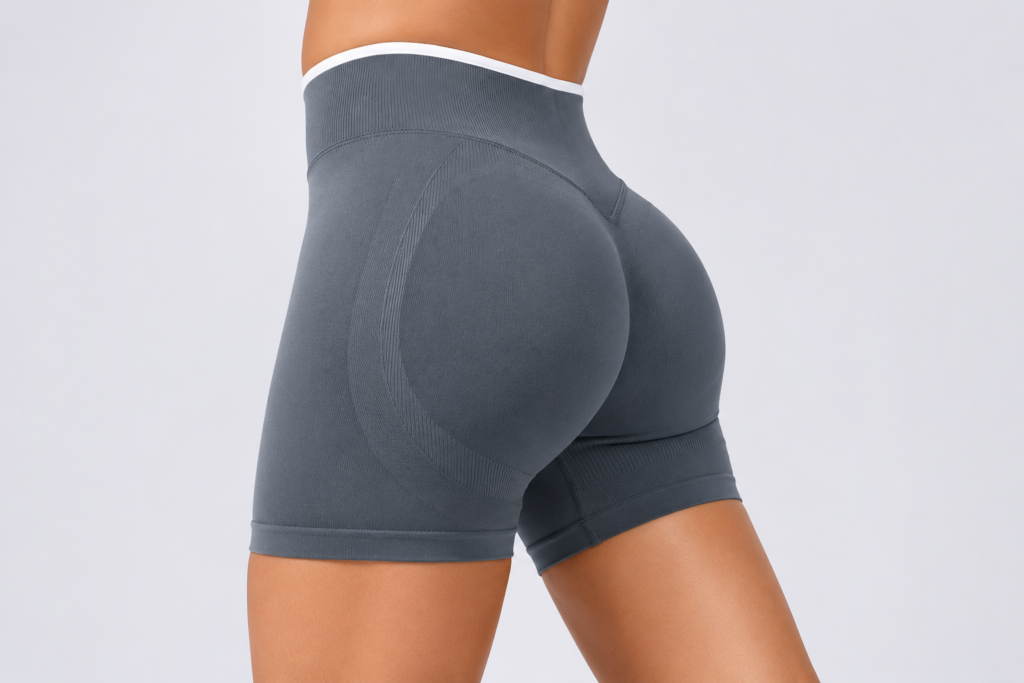
A posed K1066 gallery view identifies an appearance reference; it supplies no reliable scale or measured garment dimensions.
Identify what the size set is meant to represent
A size-set enquiry should identify the garment version as well as the requested size labels. Use the K1066 legging listing as a catalogue reference, then ask which current construction the supplier will provide. Its gallery images show differing visible arrangements, so one photograph should not silently define every sample in a proposed set. Record the image reference and ask the supplier to reconcile it with the offered version.
Ask the supplier to list the size labels available for that specific offer. Do not invent a range from familiar retail labels, or assume that the same label means the same dimensions across styles. Write the requested set against the supplier’s confirmed labels. If your buying team uses an internal size code, retain it in a separate field with a clear mapping to the original label.
Define endpoints before entering measurements
Choose the points that matter to the buying decision and describe them so another reviewer can repeat the observation. For a width, state the edges used and whether the record is a flat width or a circumference. For a length, name the starting landmark, ending landmark and route. For example, an inner-leg measurement request should identify the junction and hem points intended; it should not rely on an unexplained column headed “length”.
Use a marked drawing or sample photograph to locate the agreed points. The drawing defines the request; it does not provide a measured value unless an identified sample was actually measured. Avoid scaling dimensions from a posed catalogue photograph. Perspective, pose and hidden edges make that a different activity from measuring the garment under an agreed method.
Record the exact sample and construction before applying a size-set measurement sheet. This image is not a measurement result.
Record the condition and unit with the method
Ask the supplier to state how the sample is positioned for measurement and whether it is measured relaxed, under a specified condition or by another agreed arrangement. Do not assign an arbitrary pulling force or stretch limit. If your requirements involve extension or recovery, treat them as a separate technical specification to be defined and supported, not a value inferred from how the photographed leggings look.
Choose the reporting unit and keep it visible on the sheet. A number without a unit or method is an unresolved entry. If the supplier sends an existing chart, ask whether its definitions match your point list before comparing values. Retain the original chart and record any conversion or clarification separately so the source information remains traceable.
Sheet field | Definition to agree | Evidence to retain
Sample row | Model, garment revision and supplier size label | Physical sample identifier and dispatch reference
Point of measure | Named start, end and measurement route | Marked drawing or photograph with point label
Method and condition | Flat or circumference scope and sample arrangement | Written method shared by both reviewers
Reported value | Unit and source of the actual observation | Supplier record or buyer sample measurement entry
Review decision | Agreed specification, result and unresolved points | Reviewer, date and document revision
Use a size-set sheet that separates questions from results
The table below describes fields for a proposed sample review. It deliberately supplies no product measurements. Each returned value should relate to an actual sample ID and an agreed point definition. A missing sample, an unreadable label or an unclear endpoint should be recorded as pending rather than replaced with a value from a neighbouring size.
Agree acceptance limits through the relevant purchase specification rather than adopting an unsourced universal tolerance. If a result needs checking, ask for the exact sample, point reference and measurement record involved. A supplier chart may be useful evidence for an enquiry, but it is not proof that every piece in a later shipment has been inspected.
Confirm the size labels offered for the selected garment revision.
Give each measurement point a repeatable endpoint definition.
Keep units and sample condition beside the reported result.
Separate dimensional review from fit and performance decisions.
Make a bounded sample decision
When the samples arrive, reconcile their labels and revision with the request before reviewing dimensions. Keep a separate entry for each sample so a replacement does not inherit the earlier result without review. Record the reviewer, the document revision and whether the decision is accepted, revise or pending. Describe an uncertainty precisely: for instance, an endpoint is unclear or the supplied label does not match the dispatch list.
Dimensional review and wearer fit answer different questions. A point-of-measure sheet can document garment measurements under a named method; it does not establish comfort, body suitability, compression, elasticity or a guaranteed fit for a population. Where a fit decision is needed, define that review separately for the intended use and the specific sample. Do not describe a catalogue pose as a fit test.
Carry the point definitions into later enquiries
Retain the accepted point list and the sample decision alongside the enquiry reference. If the supplier proposes another construction revision, ask whether the measurement definitions still apply and whether a new size set is required. Reusing a column heading is convenient only when its meaning has stayed the same. A changed waistband or panel layout can require the parties to clarify the landmarks again.
The output should be a readable method sheet, an identified set of samples and a record of the decisions actually made. It should help the next reviewer understand what was measured and what still needs confirmation. Keep commercial questions such as sampling charges, available options and timing in the supplier response rather than treating a documentation checklist as a promise of supply.
Another gallery reference with its own visible arrangement. Confirm its revision before assuming it belongs to the same size-set specification.
Frequently asked questions
Can I calculate a size chart from a gallery photo?
No. Request dimensions for identified samples using agreed endpoints, units and conditions. A posed image does not provide a controlled measurement scale.
Does the same size label mean the same measurement?
Do not assume it. Preserve the supplier label and compare values only after confirming the point definitions and garment revision.
Does a measurement sheet establish wearer fit?
No. It records dimensional information under a specified method. Fit, comfort and any performance requirements need their own defined review and supporting evidence.
Select a reference in the Jiaheng Activewear catalogue and send the marked documents through the contact page. The activewear blog provides broader purchasing context. Ask for a response to the attached revision so the discussion leads to a specific, reviewable decision.
Yoga LeggingsWholesale ActivewearSample Documentationleggings size set measurement points