
Leggings Seams: Mark the Panel Layout
For a wholesale legging sample, request a separate marked front, back and side view showing the panels and seam locations the supplier is offering. Give each view a sample reference and revision, mark unresolved junctions, and ask the supplier to confirm the map against that physical sample. A catalogue photograph is a starting reference; it does not establish the complete construction or the performance of a seam.
K1066 gallery side view: use the visible lines as enquiry references and ask the supplier to identify the complete construction.
Choose the sample before describing its seams
Start with the K1066 legging listing rather than a detached screenshot. Keep the model code beside the exact gallery reference that prompted the enquiry. The gallery contains legging views with visibly different panel and seam arrangements. Treat those images as separate references until the supplier identifies which current sample and construction revision each represents. Do not combine their details into an invented single design.
This distinction matters when a buyer requests a particular waistband outline or a rear panel detail. A general instruction such as “use the seams in your picture” leaves the selected picture and the unseen parts unresolved. Instead, name the reference file and ask the supplier to return a complete view set for the offered sample. The first decision is which garment is being discussed, before deciding whether a detail should change.
Build a view map that another person can follow
Use front, back and left or right side labels consistently on the drawing or annotated photographs. State whether left and right are defined from the wearer’s perspective. Give the physical sample an identifier, then link every view to that identifier. A simple sequence of view letters is useful only when the legend explains what each letter means; it should not silently become a supplier pattern code.
Trace only what the reference actually shows. Mark the visible waistband boundary, panel edges and junctions that need discussion, and label an obscured or uncertain area as requiring confirmation. Do not extend a line around the unseen side of the garment by assumption. Ask the supplier to distinguish a panel seam from a decorative line, fold or photographic shadow where the image is ambiguous.
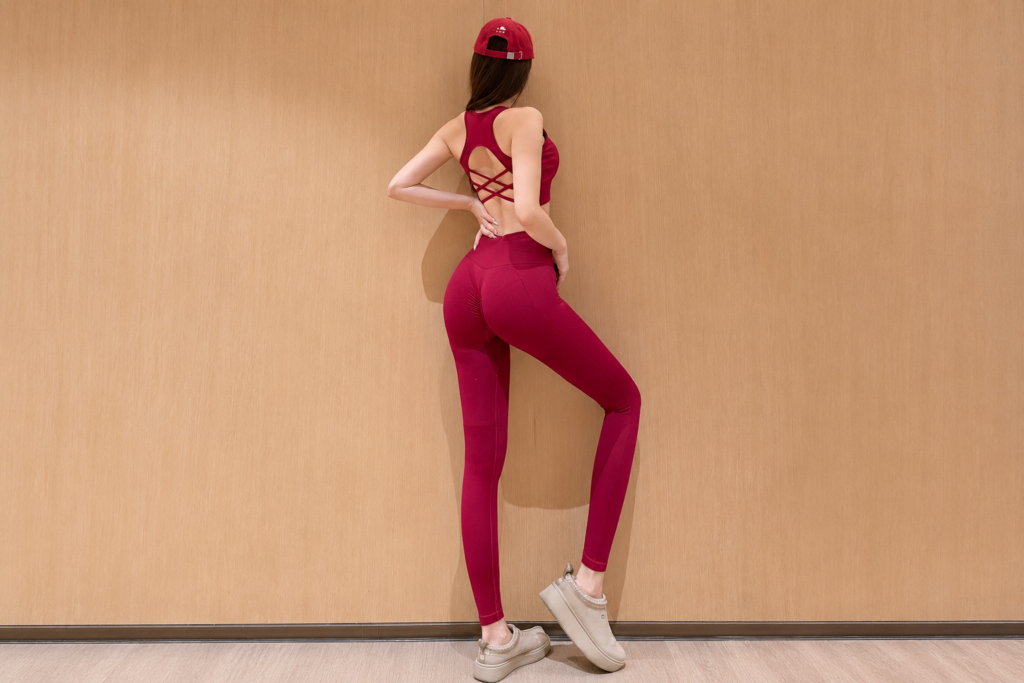
This rear gallery view has its own visible arrangement. Confirm its sample and revision instead of merging it with another view.
Turn the map into a construction question sheet
A panel map should support a decision, rather than merely add arrows to a photograph. Give each question a location, a description of the uncertainty and a response field. Ask whether the offered sample includes that particular junction and request a clearer view if the answer depends on a hidden area. Retain the response with the marked revision so later reviewers can see what was resolved.
The fields below form a proposed review sheet. They are buyer documentation suggestions, not measured construction data or a declaration that Jiaheng uses a particular production method. Record supplier terminology alongside your own labels when the two differ. Keeping both references helps avoid a situation in which one team calls an edge a panel boundary while the other means a separate line nearby.
Map field | Record or ask | Purchasing decision
Sample identity | Model, physical sample ID and map revision | Which offered garment is under review
View and orientation | Front, back, side and wearer-left convention | Where the marked detail is located
Panel or line reference | Visible boundary and the supplier’s description | Whether both teams mean the same construction feature
Unresolved junction | Question, clearer view request and response | What still needs evidence before approval
Revision disposition | Accepted, revise or pending, with reviewer and date | Which layout is carried into the purchase documents
Review a physical sample without expanding the approval
When the sample arrives, first reconcile its identifier with the view map. Compare the visible layout and mark any discrepancy on the relevant view. If the supplied item has a different rear arrangement or waistband detail, request an explanation and a revised map. Do not approve it as a colour substitution simply because it arrived under the same broad gallery listing.
Keep appearance and construction identity separate from performance acceptance. Seeing a seam does not establish its strength, comfort, stretch recovery or suitability for a particular activity. Any required assessment needs an agreed specification and appropriate evidence for the actual garment. This article supplies a documentation workflow; it does not report a test result or verify the fibre composition of the pictured leggings.
Keep a separate reference for each gallery view used in the enquiry.
Ask for a complete view set of the actual offered sample.
Record requested changes against a named map revision.
Approve only the scope actually reviewed, with open questions retained.
Keep requested changes and accepted revisions distinct
If you ask to move a line or alter a panel boundary, retain the original map and issue a new revision containing the requested difference. Ask the supplier whether the change can be offered and what sample will demonstrate it. A marked proposal is not an accepted construction until the parties identify the revised sample and record their decision.
Carry the accepted sample reference and map revision into the enquiry or order attachment. If another person reviews the garment later, that person should be able to locate the same views and understand the open points. Avoid overwriting a rejected drawing with a corrected one without preserving its identity. The useful purchasing output is a clear construction decision for a named sample, with unresolved details still visible.
A separate rear gallery reference. Its shared listing location does not prove an identical panel layout or a colour-only variation.
Frequently asked questions
Does a product name establish how a legging is constructed?
No. Keep the listing name as a reference and ask for the panel and seam arrangement of the offered sample. A name or marketing category does not replace a construction map.
Can different gallery views be combined into one specification?
Only after the supplier confirms they represent the same garment revision. Otherwise retain separate references and ask which sample will be supplied.
Does accepting a panel map approve seam performance?
No. The map records construction identity and agreed layout. Any performance requirement needs its own specification, evidence and acceptance decision.
Select a reference in the Jiaheng Activewear catalogue and send the marked documents through the contact page. The activewear blog provides broader purchasing context. Ask for a response to the attached revision so the discussion leads to a specific, reviewable decision.
Yoga LeggingsWholesale ActivewearSample Documentationleggings sample panel layout checklist